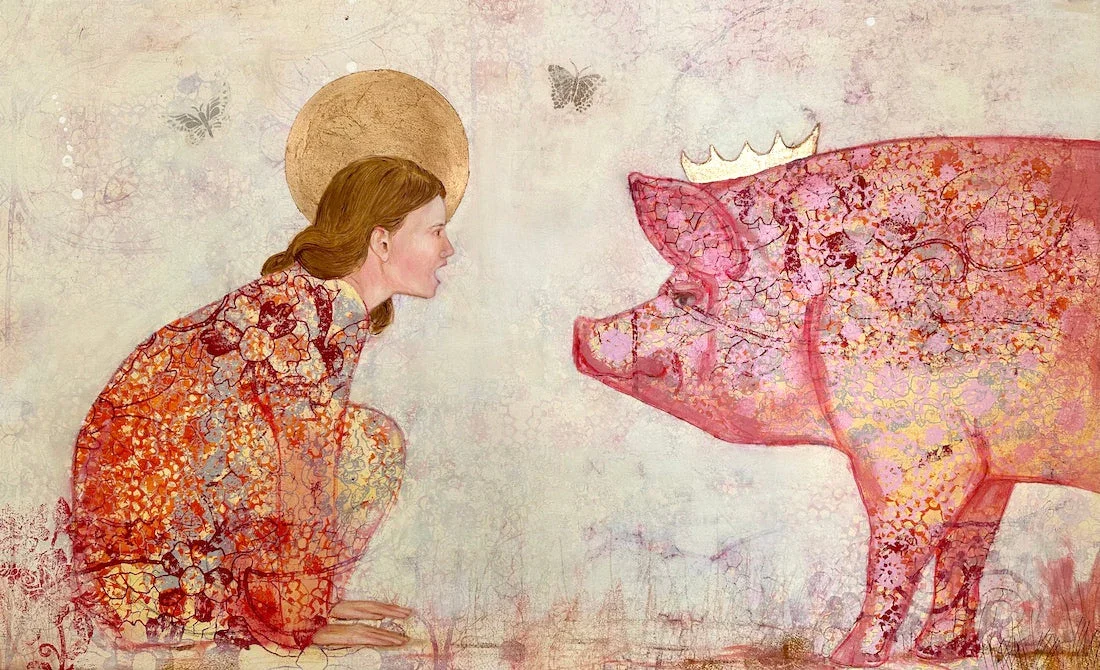
Circe & Odysseus by Leah Mariani
“Men with the heads of eagles
no longer interest me
or pig-men, or those who can fly
with the aid of wax and feathers”
Matriarchy/patriarchy, feminine/masculine, the genders have been at odds for generations preventing the collaboration needed for humanity to find wholeness. Individuation is a journey toward wholeness that requires the courage to look at and accept our fear, anger, jealousy, hatred, all our insecurities. No one is perfect, always projecting onto the other our least favorite or our most favorite attributes. We always feel we are not enough because of those projections. Withdrawing those projections, owning our own shortcomings and strengths allows the other to own theirs. Anxiety and neurosis rise out of our obsessively comparing ourselves to the other.
Everything that is written is biased by the culture in which the author was born and their perspective of the world. If we look at how the Circe myth has evolved from Homers first telling in the Odyssey to Miller’s most recent version in 2018. We can imagine how each retelling has been a response to the milieu the author was swimming through at that point in time. The projections that were flying toward the other…
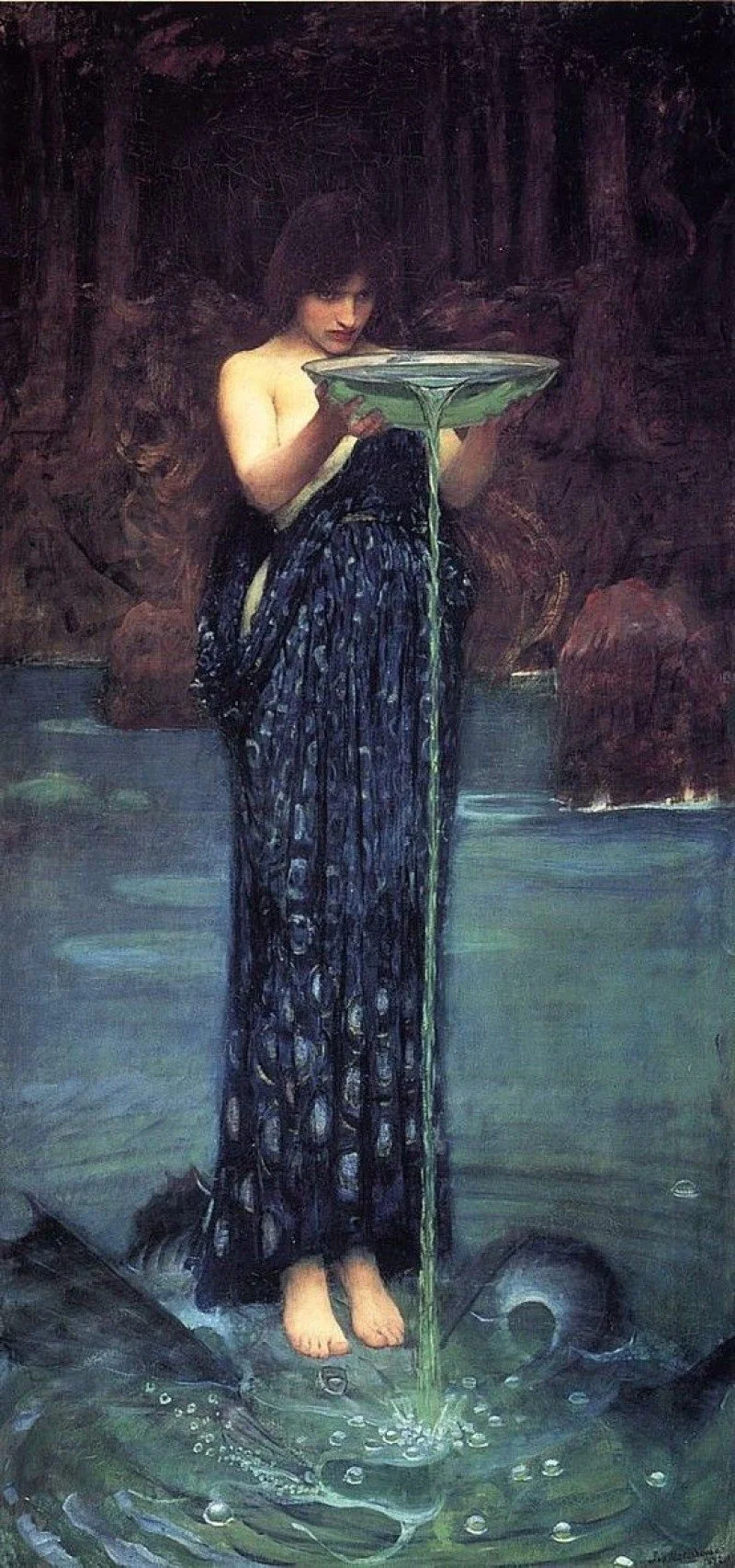
Circe Invidiosa by John Waterhouse
Further suggested reading:
Circe (2018) by Madeline Miller
Circe/Mud Poems from You are Happy (1974) by Margaret Atwood
White Goddess (1946) by Robert Johnson
Odyssey by Homer